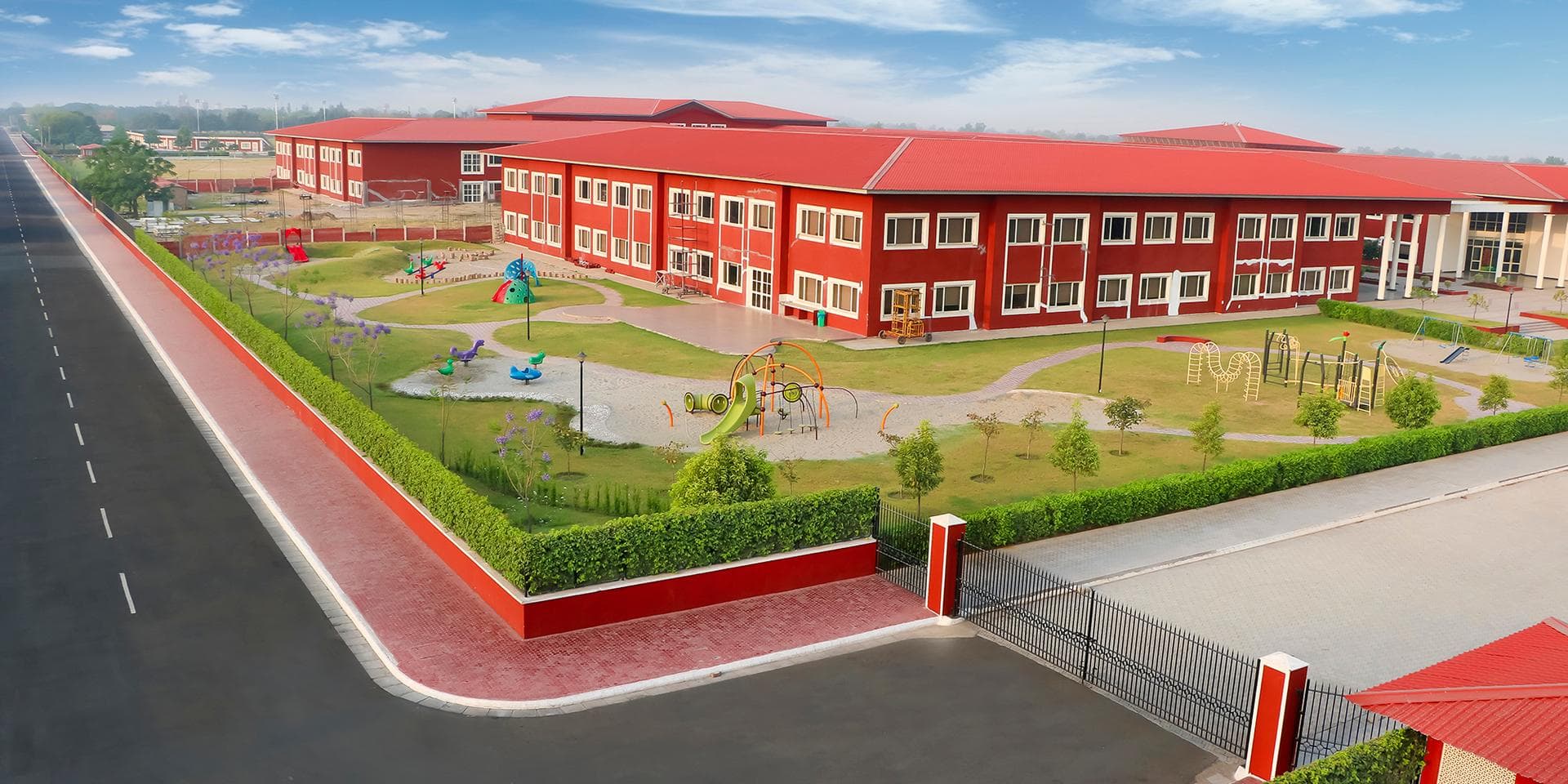
Fostering Critical Thinking in CBSE Primary Classes at Pathseekers School

1. Why Critical Thinking Matters in Primary School
In today's fast-changing world, simply memorizing facts is no longer enough for our children to truly succeed. We need to equip them with the ability to think deeply, question what they see, and solve problems creatively. This skill, known as critical thinking, is incredibly important, even for very young children in primary school. It's about helping them understand why things happen and how to figure things out for themselves, rather than just accepting information passively. This foundational ability sets the stage for lifelong learning and adaptability.
At Pathseekers School in Beas, Punjab, we firmly believe that nurturing critical thinking from an early age is paramount. Our approach aligns perfectly with the CBSE curriculum's emphasis on holistic development and higher-order thinking skills. We understand that children who learn to think critically are better prepared not just for academic challenges, but for real-world situations too. They become more confident, independent learners who can navigate complex information and make reasoned judgments, qualities essential for future success in any field they choose.
Imagine a child who can analyze a story, understand different viewpoints, or even suggest a creative solution to a playground dispute. These are the practical applications of critical thinking that we aim to cultivate. By starting early in primary classes, we build a strong mental framework that will benefit students throughout their entire educational journey and beyond. It's about teaching them how to think, not just what to think, empowering them to become active participants in their own learning and future. You might also enjoy reading about CBSE syllabus.
2. What Exactly is Critical Thinking for Young Minds?
For primary school children, critical thinking isn't about solving complex philosophical puzzles; it's much simpler and more intuitive. It’s about encouraging them to ask 'why' and 'how,' to observe things carefully, and to think through solutions to everyday problems. When a child looks at a picture and describes not just what they see, but also what they think might happen next, they are engaging in critical thinking. It’s about developing curiosity and the courage to explore ideas, even if they seem a little different from what everyone else is thinking.
Unlike rote learning, which focuses on memorizing facts without deep understanding, critical thinking encourages children to truly grasp concepts. For instance, instead of just remembering that 2+2=4, a critical thinker might be asked to explain *why* it equals four, perhaps by using blocks or drawing pictures. This approach fosters a deeper connection with the material, making learning more meaningful and lasting. It helps children build connections between different pieces of information, creating a richer tapestry of knowledge.
At Pathseekers School, we integrate this child-friendly definition of critical thinking into all our primary classes. We believe it involves several key elements: identifying a problem, gathering information, thinking about different solutions, and then choosing the best one. For example, if a plant in the classroom isn't growing well, students might be encouraged to observe it, think about what plants need, and suggest reasons why it's struggling. This simple process lays the groundwork for more complex problem-solving later on. Learn more about CBSE board to expand your understanding.
3. The CBSE Curriculum and Critical Thinking
The Central Board of Secondary Education (CBSE) has increasingly emphasized the development of higher-order thinking skills, moving away from purely memory-based learning. The National Education Policy (NEP) 2020 further strengthens this focus, advocating for experiential learning, critical thinking, and creativity from the foundational stages. This means that primary school teachers are now encouraged to design lessons that challenge students to analyze, evaluate, and create, rather than just recall information. It's a significant shift that benefits every child.
Within the CBSE framework, critical thinking is woven into various subjects. In Environmental Studies (EVS), children are encouraged to observe their surroundings, understand cause and effect (like pollution's impact), and think about solutions for environmental problems. In Mathematics, it's about understanding the logic behind operations, not just performing calculations. For example, students might explore different ways to solve a problem or explain their reasoning, going beyond a simple correct answer.
Pathseekers School prides itself on aligning seamlessly with these CBSE guidelines and the vision of NEP 2020. Our curriculum and teaching methodologies are designed to foster an environment where critical thinking is not just taught, but actively practiced every day. We ensure that our primary students are exposed to activities and questions that stimulate their minds, encouraging them to think independently and express their ideas confidently. This commitment ensures our students are well-prepared for the evolving educational landscape. A related topic worth checking out is CBSE exam preparation.
4. Asking "Why" and "How": The Power of Inquiry-Based Learning
One of the most effective ways to foster critical thinking is through inquiry-based learning, which centers around asking questions and exploring answers. Instead of teachers providing all the information, children are encouraged to ask their own questions and seek out the solutions. This approach empowers students to take ownership of their learning, making the process more engaging and memorable. It transforms the classroom into a vibrant space of discovery, where every question is valued and every answer is a step forward.
At Pathseekers School, our teachers are skilled facilitators of inquiry. They don't just answer questions; they often respond with another question, prompting students to think deeper. For example, if a child asks, "Why is the sky blue?" a teacher might ask, "What do you think makes it blue?" or "What happens to the light from the sun?" This encourages children to hypothesize, investigate, and even conduct simple experiments to find answers, developing their analytical skills naturally. For practical tips, see this guide on CBSE syllabus.
We implement inquiry-based learning across various subjects. In a science class, students might be given different materials and asked to predict which ones will float or sink, then test their predictions and explain their observations. In history, instead of just memorizing dates, they might be asked to imagine what life was like in ancient times and discuss the challenges people faced. These activities promote active thinking and a deeper understanding of concepts, moving beyond surface-level knowledge.
5. Problem-Solving Skills: Everyday Challenges as Learning Opportunities
Life is full of problems, big and small, and learning how to approach them effectively is a cornerstone of critical thinking. For primary children, problem-solving can be as simple as figuring out how to share toys fairly, how to organize their school bag efficiently, or how to resolve a disagreement with a friend. These everyday challenges, when guided by thoughtful instruction, become invaluable learning opportunities that build resilience and strategic thinking skills.
At Pathseekers School, we integrate problem-solving into daily routines and academic tasks. During group activities, if children face a hurdle, teachers encourage them to brainstorm solutions together. For example, if a group project requires drawing a large map and they only have small pieces of paper, the teacher might ask, "How can we make a big map with these small papers?" This prompts them to think about joining papers, scaling down, or finding alternative materials, fostering collaboration and creative problem-solving. If this interests you, also read about CBSE exam preparation.
Even in subjects like Mathematics, problem-solving goes beyond arithmetic. Students are presented with word problems that require them to understand the scenario, identify relevant information, choose the correct operation, and explain their steps. This process strengthens their logical reasoning and analytical abilities. By regularly engaging with such scenarios, our primary students develop confidence in tackling new challenges, knowing they have the tools to think through difficult situations.
6. Developing Observation and Analysis: Looking Beyond the Obvious
Critical thinking begins with careful observation. Teaching children to truly *see* and *listen* to the world around them is a vital first step. It's about noticing details, patterns, and anomalies that others might miss. This skill forms the basis for analysis, where they then interpret what they've observed and draw conclusions. Encouraging this detailed attention helps children build a richer understanding of their environment and the information they encounter.
At Pathseekers School, we incorporate activities specifically designed to sharpen observation skills. Nature walks around our beautiful campus in Beas are not just for exercise; students are encouraged to observe different types of leaves, listen to bird calls, and notice changes in seasons. In the classroom, science experiments involve meticulous observation of reactions, changes in color, or the behavior of materials. After observing, students are then prompted to analyze: "What did you see? What do you think caused it?" This is closely related to CBSE exam preparation — a must-read for parents.
This process of observation followed by analysis is crucial for developing reasoned thought. For instance, when reading a story, children are encouraged to observe the characters' actions and then analyze their motivations or predict outcomes. "Why do you think the character did that? What might happen next if they make a different choice?" By consistently practicing these skills, our primary students learn to look beyond surface appearances and delve into the deeper meaning and implications of what they perceive.
7. Creative Thinking and Critical Thinking: Two Sides of the Same Coin
While often seen as separate, creative thinking and critical thinking are deeply interconnected and mutually reinforcing. Critical thinking helps us evaluate ideas, while creative thinking helps us generate new ones. You need critical thinking to refine a creative idea and creative thinking to find new solutions when critical analysis reveals a problem. At Pathseekers School, we understand that nurturing both simultaneously leads to well-rounded, innovative thinkers.
When children engage in creative projects, they are inherently using critical thinking. For example, during an art class, deciding which colors to use, how to arrange elements, or what message their artwork conveys requires critical choices. Similarly, when writing a story, children must critically think about plot consistency, character development, and how to make their narrative engaging. These creative endeavors become powerful platforms for applying critical thought in a meaningful way. You might also enjoy reading about CBSE syllabus.
Our primary curriculum at Pathseekers School is designed to foster this symbiotic relationship. We encourage open-ended art projects, imaginative storytelling sessions, and drama activities where children can explore different perspectives and express themselves freely. These activities not only unleash their creativity but also challenge them to think critically about their choices and their impact. By celebrating both original ideas and thoughtful evaluation, we empower our students to become truly innovative problem-solvers.
8. The Role of Teachers at Pathseekers School
At Pathseekers School, our teachers are not just instructors who deliver information; they are mentors, facilitators, and guides who inspire critical thought. They understand that creating an environment where children feel safe to ask questions, make mistakes, and explore ideas is fundamental to fostering critical thinking. Our educators are trained to listen attentively, ask probing questions, and encourage healthy debate, transforming every classroom into a dynamic learning laboratory. Learn more about CBSE exam preparation to expand your understanding.
Our teaching methodologies emphasize interactive and participatory learning. Instead of lecturing, teachers engage students in discussions, group activities, and hands-on projects that demand active mental engagement. They use strategies like think-pair-share, where students first think individually about a problem, then discuss it with a partner, and finally share their ideas with the class. This approach encourages diverse perspectives and helps children articulate their thoughts clearly.
Continuous professional development is a cornerstone for our faculty at Pathseekers School. Our teachers regularly attend workshops and training sessions focused on innovative pedagogical techniques that promote critical thinking, as per CBSE guidelines. They learn to design lessons that challenge students to analyze, synthesize, and evaluate information, ensuring that every child receives the best possible guidance in developing these essential skills. Their dedication is key to our students' success.
9. How Parents Can Support Critical Thinking at Home
The journey of fostering critical thinking doesn't stop at the school gates; parents play an equally vital role at home. Simple, everyday interactions can significantly contribute to your child's ability to think critically. By creating an environment that values curiosity and encourages exploration, you can reinforce the skills they are learning at Pathseekers School and help them apply these abilities in different contexts. Your involvement is incredibly powerful. A related topic worth checking out is CBSE curriculum.
Here are some practical tips for parents:
- Ask Open-Ended Questions: Instead of questions with yes/no answers, ask 'What do you think?', 'Why did that happen?', or 'How could we solve this?' For example, if a toy breaks, ask, "What do you think went wrong? How can we fix it?"
- Encourage Curiosity: When your child asks a question, instead of giving an immediate answer, sometimes turn it back to them: "That's a great question! What do *you* think the answer might be?" Then, explore the answer together.
- Read Together and Discuss: After reading a story, talk about it. "Why did the character make that choice? How would you have felt in their situation? What do you think will happen next?" This helps them analyze plot and character motives.
- Limit Screen Time and Promote Play: Unstructured play allows children to create their own rules, solve imaginary problems, and use their creativity, all of which are critical thinking exercises. Too much passive screen time can hinder this development.
- Involve Them in Decision-Making: For age-appropriate decisions, like choosing a meal or planning a family outing, let them contribute ideas and discuss the pros and cons. This helps them weigh options and understand consequences.
- Model Critical Thinking: Children learn by observing. When you encounter a problem, talk through your thought process aloud. "Hmm, this recipe says to use two cups of flour, but I only have one. What can I do?"
By consistently applying these strategies, parents can create a home environment that beautifully complements the critical thinking initiatives at Pathseekers School. This partnership between home and school is crucial for developing well-rounded individuals who are prepared to think for themselves, question the world around them, and contribute meaningfully to society. Every conversation, every shared discovery, builds a stronger foundation for their future.
10. Building Future Leaders and Thinkers at Pathseekers
Fostering critical thinking in primary classes is more than just an educational goal; it's an investment in the future of our children and our society. When young minds are trained to think independently, question assumptions, and solve problems creatively, they are not only prepared for academic excellence but also equipped with the essential life skills needed to thrive in an ever-evolving world. These are the individuals who will innovate, lead, and make a positive impact. For practical tips, see this guide on CBSE standards.
At Pathseekers School in Beas, Punjab, we are deeply committed to this vision. Our dedicated educators, child-centric curriculum, and engaging learning environment are all designed to empower primary students to become confident, curious, and capable critical thinkers. We believe that by nurturing these vital skills from the earliest stages of education, we are laying a strong foundation for a lifetime of learning, discovery, and success. Our goal is to cultivate not just good students, but great thinkers.
We invite parents to partner with us in this important endeavor. By reinforcing critical thinking at home and supporting our school's initiatives, we can collectively ensure that every child at Pathseekers School develops the intellectual tools they need to navigate challenges, seize opportunities, and shape a brighter future. Together, we are building a generation of thoughtful, resilient, and innovative individuals who will undoubtedly become the leaders and problem-solvers of tomorrow. Join us in this exciting journey of empowering young minds.
Recommended Reading & Resources
Explore these related articles and resources to deepen your understanding of this topic:
Published by Pathseekers School, Beas — A leading CBSE school in Amritsar, Punjab.
More articles on our official portal