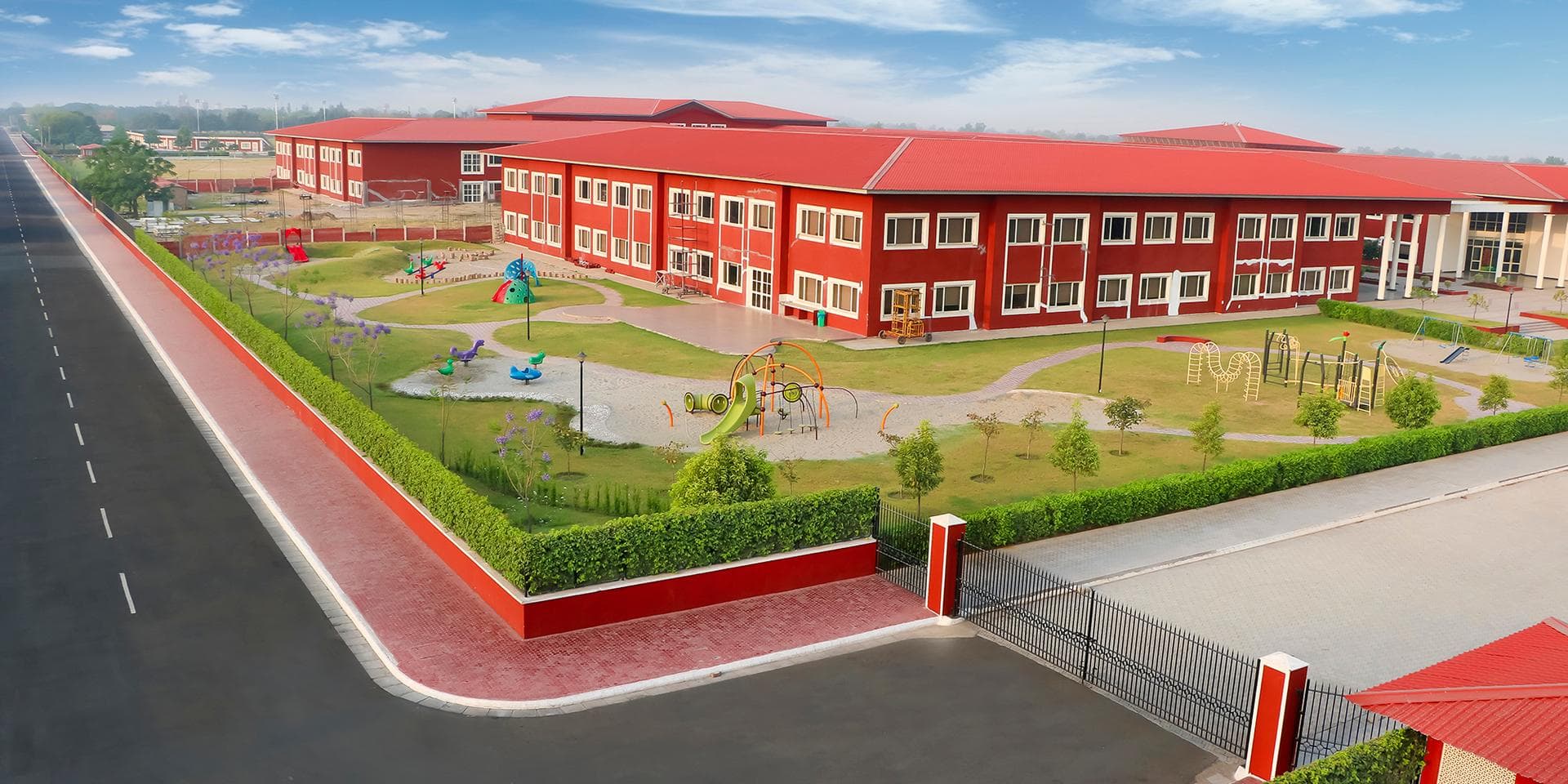
STEM Education: Preparing Students for Tomorrow's World

1. Introduction: What is STEM Education and Why It Matters Now More Than Ever
In today's fast-changing world, the skills our children need to succeed are constantly evolving. It's no longer enough to simply memorize facts; students must be able to think critically, solve complex problems, and innovate. This is precisely where STEM education comes into play. STEM stands for Science, Technology, Engineering, and Mathematics, and it's an approach to learning that integrates these four crucial subjects into a cohesive and interdisciplinary program. At Pathseekers School in Beas, Punjab, we firmly believe that a strong STEM foundation is the cornerstone of a truly future-ready education, preparing our students not just for exams, but for life itself.
The importance of STEM education has grown exponentially because the global economy is increasingly driven by technological advancements and scientific discoveries. From artificial intelligence to renewable energy, the jobs of tomorrow will demand a workforce that is skilled in STEM fields. By engaging with STEM subjects from an early age, students develop a unique set of capabilities, including logical reasoning, creativity, and the ability to adapt to new challenges. Our goal at Pathseekers School is to nurture these abilities, ensuring every child can confidently navigate and contribute to the world they will inherit.
This blog post will delve deep into how STEM education shapes future-ready students, exploring each component of STEM and its profound impact. We will discuss how a holistic STEM approach, like the one adopted at Pathseekers School, goes beyond traditional classroom learning to foster innovation, critical thinking, and practical problem-solving. We invite parents and students to understand the immense benefits of this educational philosophy, which is designed to empower young minds from Beas and beyond to excel in a world that thrives on scientific and technological progress. You might also enjoy reading about quality education.
2. Beyond Textbooks: The Core Principles of STEM Learning
STEM education at Pathseekers School isn't just about adding more subjects to the timetable; it's about a fundamentally different way of learning. Unlike traditional methods that often focus on rote memorization and passive reception of information, STEM emphasizes active engagement, inquiry-based learning, and hands-on exploration. It encourages students to ask 'why' and 'how,' to experiment, to make mistakes, and to learn from them. This approach transforms the classroom into a dynamic laboratory where curiosity is celebrated and problem-solving is an exciting adventure, rather than a chore.
One of the core principles of STEM is interdisciplinary learning. Instead of teaching science, technology, engineering, and mathematics in isolation, STEM education connects these fields, showing students how they are interwoven in the real world. For example, building a simple robot involves understanding physics (science), using coding (technology), designing its structure (engineering), and calculating measurements (mathematics). This integrated approach helps students see the relevance of what they are learning and how different subjects combine to solve real-world problems, making their education much more meaningful and applicable.
Furthermore, STEM education strongly promotes critical thinking, collaboration, and communication skills. When students work on a STEM project, they often collaborate in teams, sharing ideas, debating solutions, and presenting their findings. These are invaluable 'soft skills' that are highly sought after in any profession. At Pathseekers School, our educators design activities that require students to think deeply, work together, and articulate their thoughts clearly, preparing them not just for academic success but also for effective teamwork and leadership in their future careers. This holistic development is key to creating well-rounded individuals. Learn more about learning methods to expand your understanding.
3. Science: Unlocking the Secrets of the Universe
Science is the foundation of understanding the natural world, from the smallest atom to the vastness of space. In STEM education, science is taught not just as a collection of facts, but as a method of inquiry and discovery. Students at Pathseekers School learn to observe, hypothesize, experiment, and analyze data, much like real scientists. This hands-on approach brings scientific concepts to life, making them tangible and exciting. For instance, instead of just reading about photosynthesis, students might conduct experiments to see how light affects plant growth, fostering a deeper understanding and appreciation for biological processes.
The CBSE curriculum places a significant emphasis on scientific literacy, and our STEM program at Pathseekers School goes a step further by encouraging students to apply scientific principles to everyday situations. Understanding concepts like gravity, energy conservation, or the properties of materials helps students make sense of the world around them and make informed decisions. Whether it's discussing the impact of pollution on local ecosystems in Beas or exploring the physics behind a roller coaster, scientific knowledge empowers students to be curious, analytical, and responsible citizens who can engage with complex issues.
Through engaging science experiments and projects, students at Pathseekers School develop a sense of wonder and a passion for discovery. They learn to question assumptions, test theories, and develop logical conclusions based on evidence. This scientific mindset is crucial for innovation and problem-solving in any field. By nurturing this spirit of inquiry, we are not just teaching science; we are cultivating future researchers, doctors, environmentalists, and engineers who will contribute to solving some of humanity's greatest challenges, all starting with a strong foundation in scientific thinking. A related topic worth checking out is learning methods.
4. Technology: Empowering Innovation and Digital Literacy
In our modern world, technology is ubiquitous, influencing every aspect of our lives, from communication and entertainment to healthcare and transportation. STEM education recognizes the critical importance of digital literacy and empowers students to not just consume technology, but also to understand, create, and innovate with it. At Pathseekers School, technology isn't just a separate computer class; it's integrated across subjects, teaching students how to use digital tools effectively, understand programming concepts, and navigate the digital landscape responsibly and safely. This prepares them for a future where technology will only become more central.
Learning about technology in a STEM context means more than just knowing how to operate software. It involves understanding the principles behind technological innovations, such as algorithms, data structures, and network systems. Our students engage in activities like basic coding, robotics, and digital design, which help them develop computational thinking skills. These skills are essential for problem-solving in the digital age, enabling them to break down complex issues into smaller, manageable parts and develop systematic solutions. This hands-on experience demystifies technology and turns users into creators. For practical tips, see this guide on education trends.
Furthermore, technology education at Pathseekers School also covers crucial aspects like digital citizenship and cybersecurity awareness. In an increasingly connected world, it's vital for students to understand their online footprint, protect their privacy, and identify misinformation. By providing a comprehensive understanding of technology, both its potential and its pitfalls, we ensure our students are not just technologically proficient but also responsible and ethical digital citizens. This holistic approach to technology empowers them to harness its power for positive change and personal growth in Beas and globally.
5. Engineering: Designing Solutions for a Better Tomorrow
Engineering is often called the application of science and mathematics to solve real-world problems. In a STEM framework, engineering education teaches students to think like innovators and designers, encouraging them to identify needs, brainstorm solutions, build prototypes, and test their creations. At Pathseekers School, this means moving beyond theoretical concepts to practical, project-based learning where students actively design and construct. For example, they might be challenged to build a bridge that can support a certain weight, or design a water filtration system, directly applying what they've learned in science and math.
The engineering component of STEM fosters a crucial skill known as design thinking. This systematic approach involves empathizing with users, defining problems clearly, ideating creative solutions, prototyping those solutions, and continuously testing and refining them. This iterative process teaches resilience, adaptability, and the value of learning from failure. When a prototype doesn't work as expected, students learn to analyze why, make adjustments, and try again, mirroring the real-world process of innovation that engineers follow every day. This hands-on experience is invaluable for developing persistent problem-solvers. If this interests you, also read about modern education.
Pathseekers School integrates engineering principles through various activities, including robotics clubs, science fairs, and hands-on workshops. Students might work on designing sustainable energy models, creating automated systems, or even building simple machines. These projects not only make learning exciting but also develop their spatial reasoning, manual dexterity, and teamwork skills. By engaging in engineering challenges, our students learn to be resourceful, think creatively under constraints, and ultimately become creators who can build and shape the future, whether in Beas or on a global stage, turning their ideas into tangible solutions.
6. Mathematics: The Universal Language of Logic and Problem-Solving
Mathematics is far more than just numbers and equations; it is the universal language of logic, patterns, and critical thinking that underpins all STEM fields. A strong foundation in mathematics is essential for understanding scientific principles, developing technological innovations, and executing engineering designs. At Pathseekers School, we strive to make mathematics engaging and relevant, showing students how it applies to their everyday lives and the world around them, rather than presenting it as an abstract, intimidating subject. We connect mathematical concepts to real-world scenarios, making learning both practical and enjoyable.
Through STEM education, students learn to appreciate mathematics as a powerful tool for problem-solving and decision-making. They develop skills in logical reasoning, data analysis, quantitative interpretation, and abstract thinking. For example, when analyzing data from a science experiment or calculating the forces needed for an engineering project, students use mathematical principles to make sense of information and arrive at accurate conclusions. This practical application helps students understand the 'why' behind mathematical concepts, solidifying their understanding and boosting their confidence in their numerical abilities. This is closely related to learning methods — a must-read for parents.
The CBSE curriculum emphasizes mathematical proficiency, and our teachers at Pathseekers School go beyond the textbook by incorporating interactive games, puzzles, and real-world problems that require mathematical solutions. Whether it's calculating the best route for a school trip, budgeting for a class project, or understanding statistical trends, mathematics becomes a dynamic and essential skill. By fostering a deep and practical understanding of mathematics, we equip our students with the analytical prowess needed to excel in any STEM career and navigate the complexities of modern life with confidence and precision, right here in Beas and beyond.
7. Developing Critical Thinking and Problem-Solving Skills
One of the most significant benefits of STEM education is its unparalleled ability to cultivate critical thinking and problem-solving skills, which are paramount in the 21st century. Instead of simply being told answers, students in a STEM environment are constantly challenged to identify problems, analyze information, evaluate different solutions, and justify their reasoning. This process moves them from passive learners to active thinkers, capable of dissecting complex situations and developing effective strategies, a skill far more valuable than memorizing facts that can be easily looked up.
At Pathseekers School, our STEM activities are designed to present students with open-ended challenges that require them to think creatively and logically. For instance, a student might be tasked with designing a device to clean polluted water, requiring them to research water contaminants, experiment with different filtration materials, and refine their design based on test results. This isn't about finding the 'right' answer from a book, but about developing a robust thought process to arrive at a viable solution, fostering resilience and independent thinking in every student. You might also enjoy reading about modern education.
These critical thinking and problem-solving abilities extend far beyond the classroom. Whether our students choose careers in science, business, arts, or any other field, the capacity to approach challenges systematically, evaluate information discerningly, and innovate solutions will be invaluable. Pathseekers School is committed to nurturing these essential skills, ensuring that our students from Beas are not just knowledgeable, but also wise, adaptable, and capable of making significant contributions to their communities and the world at large, equipped with the tools to tackle any obstacle they encounter.
8. Fostering Creativity and Innovation through STEM
Many people mistakenly believe that STEM subjects are purely logical and rigid, leaving no room for creativity. However, true innovation in science, technology, engineering, and mathematics often stems from imaginative thinking and novel approaches. STEM education at Pathseekers School actively encourages students to think outside the box, experiment with unconventional ideas, and develop unique solutions to problems. It teaches them that there isn't always one 'correct' answer, and that sometimes the most groundbreaking discoveries come from daring to be different and challenging existing norms. Learn more about educational resources to expand your understanding.
Creativity in STEM can manifest in various ways, from designing an aesthetically pleasing and functional robot to devising an elegant mathematical proof, or even conceptualizing a new scientific experiment. Our project-based learning approach provides ample opportunities for students to express their creativity. For example, during a design challenge, students are not just given a blueprint; they are encouraged to invent their own solutions, choose their materials, and personalize their projects, fostering a sense of ownership and allowing their individual flair to shine through. This freedom to explore leads to truly innovative outcomes.
Pathseekers School provides a supportive environment where students feel safe to take risks, make mistakes, and learn from them without fear of failure. We believe that errors are valuable learning opportunities that fuel further innovation. By fostering this culture of experimentation and encouraging students to iterate on their ideas, we are cultivating a generation of innovators who are not afraid to push boundaries. Our students, from Beas and beyond, are empowered to imagine new possibilities and turn those visions into reality, becoming the creators and shapers of tomorrow's world through their inventive STEM endeavors.
9. Preparing for Future Careers: STEM Pathways and Opportunities
The job market of the future will be vastly different from today's, with a rapidly increasing demand for individuals skilled in STEM fields. From data scientists and artificial intelligence specialists to biotechnologists, renewable energy engineers, and cybersecurity experts, STEM careers are at the forefront of innovation and economic growth. By providing a robust STEM education, Pathseekers School is directly preparing its students for these high-growth, high-impact professions, ensuring they have the foundational knowledge and practical skills necessary to thrive in an evolving global economy and secure rewarding futures. A related topic worth checking out is quality education.
A strong STEM background opens doors to a wide array of educational and career pathways. Students with a solid understanding of science, technology, engineering, and mathematics are better equipped to pursue higher education in specialized fields, whether it's medicine, computer science, aerospace engineering, or environmental science. Our career counseling at Pathseekers School guides students in understanding these diverse opportunities and helps them align their interests with potential STEM career paths, ensuring they make informed decisions about their academic and professional journeys after graduating from our school in Beas.
Beyond specific STEM professions, the transferable skills developed through STEM education—such as critical thinking, problem-solving, data analysis, and collaboration—are valuable in virtually every industry. Employers across sectors are looking for individuals who can adapt to new technologies, analyze complex information, and contribute to innovative solutions. Therefore, a STEM-focused education at Pathseekers School not only prepares students for specific technical roles but also equips them with a versatile skill set that makes them highly employable and adaptable in any future career landscape they choose to enter, making them truly future-ready individuals.
10. Pathseekers School's Commitment to a STEM-Focused Future
At Pathseekers School, located in the vibrant community of Beas, Punjab, our commitment to STEM education is at the core of our mission to create future-ready students. We understand that providing an exceptional STEM program requires more than just textbooks; it demands dedicated infrastructure, innovative teaching methodologies, and a passionate faculty. We have invested in state-of-the-art science labs, computer facilities, and robotics workshops that provide students with hands-on learning experiences, allowing them to explore, experiment, and innovate in a supportive and stimulating environment. For practical tips, see this guide on learning methods.
Our experienced and highly qualified teachers are trained to deliver the CBSE curriculum through an engaging STEM lens, fostering curiosity and critical thinking in every lesson. They act as facilitators, guiding students through inquiry-based projects and encouraging them to discover solutions independently. Beyond the regular curriculum, Pathseekers School offers a variety of extracurricular STEM activities, including science clubs, coding competitions, and engineering challenges, which further ignite students' passion for these subjects and provide platforms for them to showcase their talents and deepen their understanding.
We believe that by nurturing a strong foundation in Science, Technology, Engineering, and Mathematics, we are empowering our students to become the innovators, leaders, and problem-solvers of tomorrow. Pathseekers School is dedicated to providing an education that transcends traditional boundaries, preparing our students not just to succeed in exams but to excel in a world that increasingly values analytical prowess, creativity, and adaptability. We invite parents to explore how Pathseekers School is shaping brighter futures for their children, right here in Beas, and equipping them to make a meaningful impact on the global stage through the power of STEM education.
Recommended Reading & Resources
Explore these related articles and resources to deepen your understanding of this topic:
Published by Pathseekers School, Beas — A leading CBSE school in Amritsar, Punjab.
More articles on our official portal