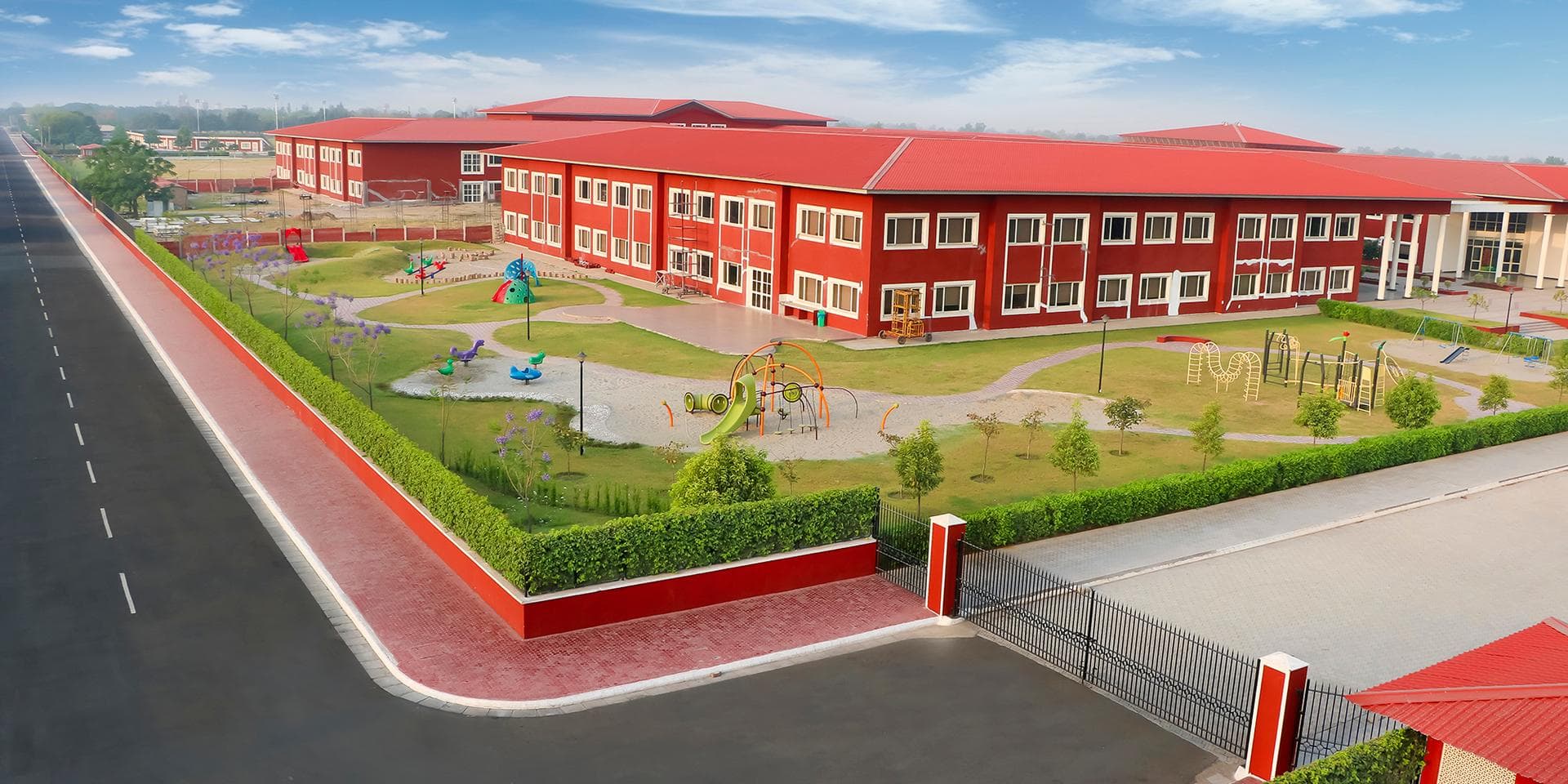
The Power of STEM: Shaping Future-Ready Students at Pathseekers School

Introduction: What is STEM and Why It Matters Now More Than Ever
In a world that is constantly evolving at an unprecedented pace, preparing our children for the future requires more than just traditional academic knowledge. The jobs of tomorrow will demand a different set of skills, and the challenges our society faces will need innovative solutions. This is where STEM education comes into play, standing for Science, Technology, Engineering, and Mathematics. It is an integrated approach to learning that encourages students to think critically, solve problems creatively, and understand the world through an analytical lens, moving beyond rote memorization to true comprehension and application.
At Pathseekers School in Beas, Punjab, we deeply understand that the landscape of employment and global challenges is shifting rapidly. The traditional pathways to success are being redefined by advancements in artificial intelligence, biotechnology, sustainable energy, and digital communication. Therefore, merely teaching subjects in isolation is no longer sufficient. Our goal is to equip students not just with facts, but with the ability to adapt, innovate, and lead in a world that is yet to be fully imagined. STEM education provides the foundational framework for developing these essential 21st-century competencies, ensuring our students are not just participants, but active shapers of their future.
The relevance of STEM education extends far beyond just pursuing careers in scientific or technical fields; it instills a mindset that is invaluable in any profession or life situation. It teaches perseverance, logical reasoning, and the importance of empirical evidence, skills that are crucial for making informed decisions and navigating complex situations. By fostering an early interest and proficiency in STEM subjects, Pathseekers School aims to ignite curiosity and passion, transforming students into lifelong learners and critical thinkers who are well-prepared to tackle any obstacle and seize every opportunity that comes their way, empowering them to thrive in an ever-changing global environment. You might also enjoy reading about educational resources.
Breaking Down STEM: Science, Technology, Engineering, Mathematics
To truly appreciate the power of STEM, it's helpful to understand what each component brings to the table. Science, at its core, is about understanding the natural world through observation and experimentation. It teaches students to ask questions, formulate hypotheses, and test them rigorously, uncovering the fundamental principles that govern everything from the smallest atom to the vastness of the cosmos. This scientific inquiry develops a sense of wonder and a methodical approach to discovery, fostering an appreciation for evidence-based reasoning and the continuous pursuit of knowledge, which is vital in all aspects of life.
Technology involves the application of scientific knowledge for practical purposes, creating tools and systems that improve human life. This isn't just about computers; it encompasses everything from simple machines to advanced robotics and artificial intelligence. In a STEM context, students learn to use, create, and understand technology, moving beyond being mere consumers to becoming innovators. They explore coding, digital design, and various technological applications, gaining hands-on experience that demystifies complex systems and empowers them to leverage technology effectively and ethically in their daily lives and future careers, making them tech-literate and capable.
Engineering is the creative application of scientific and mathematical principles to design, build, and maintain structures, machines, and processes. It's about solving real-world problems by turning ideas into reality, often involving design thinking, prototyping, and iterative improvement. Students engaging in engineering challenges learn to identify needs, brainstorm solutions, and work collaboratively to bring their designs to life. This field teaches resilience, practical application of theory, and the satisfaction of constructing something tangible and useful, preparing them to be problem-solvers and creators who can build the future, whether it's a bridge or a new software application. Learn more about quality education to expand your understanding.
Finally, Mathematics is the language of STEM, providing the tools and logical framework necessary for understanding and quantifying the world. It underpins all scientific discoveries, technological advancements, and engineering feats. Beyond basic arithmetic, mathematics teaches logical reasoning, abstract thinking, and problem-solving strategies that are universally applicable. From understanding data trends to designing algorithms, strong mathematical skills are indispensable. By mastering mathematics, students at Pathseekers School develop the analytical prowess to decode complex information and make sound judgments, making them adept at navigating a data-rich world with confidence and precision.
Beyond Textbooks: Practical Learning in STEM
At Pathseekers School, we firmly believe that true learning in STEM goes far beyond the pages of a textbook. While foundational knowledge is crucial, the real magic happens when students get their hands dirty, engage in experiments, and tackle real-world challenges. Our approach emphasizes practical, experiential learning, transforming abstract concepts into tangible experiences. Instead of just reading about gravity, students might drop objects of different weights to observe their fall; instead of just memorizing chemical formulas, they conduct experiments safely in our well-equipped labs, witnessing reactions firsthand and understanding their implications, making science come alive in a memorable way.
This hands-on methodology is a cornerstone of our STEM curriculum, aligning perfectly with the National Education Policy (NEP) 2020 and CBSE's focus on competency-based education. For instance, in our science labs, students are encouraged to design their own experiments, analyze data, and draw conclusions, mirroring the work of actual scientists. In technology classes, they might learn basic coding by creating simple games or apps, developing logical thinking and problem-solving skills in a fun and interactive manner. These activities are not just supplementary; they are integral to deep understanding, allowing students to construct knowledge actively rather than passively receiving it, fostering genuine curiosity and retention. A related topic worth checking out is modern education.
Engineering projects at Pathseekers School often involve designing and building prototypes, such as bridges from popsicle sticks or simple robotic arms, which teaches them about structural integrity, mechanics, and design flaws through trial and error. Mathematics is applied in these scenarios to calculate forces, measure dimensions, and optimize designs, making abstract equations relevant and meaningful. This practical engagement fosters a deeper understanding of scientific principles, encourages creative problem-solving, and develops critical thinking skills that are essential for future success. By engaging in these real-world scenarios, our students develop a robust skillset that is both academic and practical, preparing them for higher education and diverse career paths.
Developing Critical Thinking and Problem-Solving Skills
One of the most significant benefits of a strong STEM education is its unparalleled ability to cultivate critical thinking and problem-solving skills. These are not merely academic aptitudes but fundamental life skills that empower individuals to navigate complex situations, make informed decisions, and innovate in any field. STEM challenges students to analyze information, identify patterns, evaluate evidence, and construct logical arguments, moving beyond surface-level understanding to delve into the 'why' and 'how' of phenomena. This rigorous mental training is invaluable, equipping them to approach any new information or challenge with a discerning and analytical mind, rather than simply accepting things at face value.
At Pathseekers School, our STEM programs are deliberately designed to present students with open-ended problems that require them to think outside the box. For example, a science project might involve investigating the most effective way to purify water, requiring students to research various methods, conduct experiments, and analyze results to determine the optimal solution. An engineering challenge might task them with designing a device to solve a specific community problem, encouraging them to brainstorm, prototype, test, and refine their ideas. These scenarios foster resilience and teach students that failure is often a step towards success, promoting a growth mindset crucial for continuous learning and improvement. For practical tips, see this guide on quality education.
The problem-solving approach ingrained through STEM education extends beyond the classroom and into everyday life. Students learn to break down large, intimidating problems into smaller, manageable parts, a strategy applicable to everything from organizing a complex project to resolving interpersonal conflicts. They develop the ability to consider multiple perspectives, anticipate potential outcomes, and adapt their strategies when faced with unforeseen difficulties. This systematic way of thinking empowers Pathseekers students to not only excel academically but also to become resourceful, independent individuals capable of tackling any obstacle they encounter, making them effective decision-makers in an unpredictable world.
Fostering Creativity and Innovation through STEM
While often associated with logic and precision, STEM education is a powerful catalyst for creativity and innovation. It provides the foundational knowledge and tools necessary for students to imagine new possibilities and bring novel ideas to life. True innovation doesn't happen in a vacuum; it often emerges from a deep understanding of scientific principles, technological capabilities, and mathematical relationships. At Pathseekers School, we encourage students to see beyond established methods and to envision solutions that are not yet in existence, fostering an environment where original thought is celebrated and nurtured from an early age.
Consider the engineering design process, a core component of STEM. It begins with identifying a problem, then moves through brainstorming, designing, prototyping, testing, and refining. Each step of this process demands creative thinking. Students might be tasked with designing a more efficient solar panel or a sustainable irrigation system for a local farm. These challenges require them to think divergently, combine existing concepts in new ways, and come up with unique solutions that address specific needs. The iterative nature of engineering teaches them that there isn't always one right answer, but rather a continuous pursuit of better, more inventive solutions, honing their inventive spirit. If this interests you, also read about modern education.
Furthermore, technology, particularly coding and digital creation, offers endless avenues for creative expression. Students learning to code aren't just memorizing syntax; they are learning to build, to design interactive experiences, and to bring their digital visions to life. From developing a simple game to creating a functional website, these activities blend logical structure with imaginative design, allowing students to innovate within a structured framework. At Pathseekers School, our emphasis on project-based learning in STEM ensures that students are constantly engaged in creative problem-solving, equipping them with the mindset and skills to become future innovators and entrepreneurs who can truly make a difference in the world.
The Interdisciplinary Nature of STEM and Real-World Applications
One of the most compelling aspects of STEM education is its inherently interdisciplinary nature. In the real world, problems rarely fit neatly into a single academic category; they often require insights and tools from multiple fields. STEM education at Pathseekers School mirrors this reality by breaking down traditional subject silos and demonstrating how science, technology, engineering, and mathematics are deeply interconnected and mutually reinforcing. This integrated approach helps students understand the holistic picture, preparing them for the complex, multifaceted challenges they will encounter in higher education and their professional lives, where collaboration across disciplines is key. This is closely related to learning methods — a must-read for parents.
For example, designing a sustainable city involves applying scientific understanding of ecology and climate, using technology for smart infrastructure, engineering efficient building designs, and employing mathematical models for urban planning and resource allocation. Similarly, developing a new medical treatment requires scientific research, technological instruments, engineering of delivery systems, and statistical analysis of trial data. By working on such interdisciplinary projects, students learn to draw connections between different areas of knowledge, enhancing their ability to see the bigger picture and develop comprehensive solutions, making their learning relevant and impactful.
At Pathseekers School, we actively promote projects that require students to synthesize knowledge from across the STEM disciplines. This could involve using data analysis (math) to understand environmental pollution (science), then designing a purification system (engineering) using digital tools (technology). Such projects not only deepen their understanding of individual subjects but also cultivate essential collaboration and communication skills, as students learn to work effectively in teams, bringing diverse perspectives to solve common problems. This interdisciplinary mindset is crucial for addressing global challenges like climate change, disease, and poverty, preparing our students to be globally conscious and capable citizens.
STEM and the CBSE Curriculum: A Synergistic Approach
Pathseekers School is proud to align its robust STEM education philosophy with the progressive framework of the CBSE curriculum. The Central Board of Secondary Education (CBSE) has increasingly emphasized experiential learning, skill development, and a holistic approach to education, moving away from rote memorization towards conceptual understanding and application. Our STEM initiatives are not just add-ons but are deeply integrated into and enhance the core CBSE syllabus, providing students with a richer, more practical, and engaging learning experience that perfectly complements the board's vision for future-ready learners. You might also enjoy reading about quality education.
The CBSE curriculum for Science and Mathematics, particularly in higher grades, incorporates numerous practical experiments, project work, and investigatory activities. At Pathseekers School, we go beyond the minimum requirements, providing state-of-the-art laboratories and dedicated faculty who guide students through these practicals with an emphasis on inquiry-based learning. For instance, while the CBSE syllabus outlines specific experiments in Physics, Chemistry, and Biology, our teachers encourage students to explore variations, analyze results critically, and even propose alternative hypotheses, fostering genuine scientific temperament and investigative skills that are explicitly promoted by the CBSE, ensuring a deeper engagement with the subject matter.
Furthermore, CBSE's focus on skill-based subjects and vocational training at various levels, along with initiatives like the 'Artificial Intelligence' and 'Information Technology' courses, perfectly complements our technology-driven STEM approach. Pathseekers School integrates coding, robotics, and digital literacy into its curriculum from an early age, preparing students for these advanced subjects and beyond. We ensure that our students are not just familiar with the theoretical concepts but also gain practical proficiency, giving them a distinct advantage as they progress through the CBSE system and prepare for competitive examinations and future academic pursuits, building a strong foundation for their success.
Preparing for Future Careers: The Demand for STEM Professionals
The global job market is undergoing a profound transformation, with an ever-increasing demand for professionals skilled in STEM fields. Industries such as information technology, healthcare, renewable energy, advanced manufacturing, and data science are experiencing rapid growth and are constantly seeking individuals with strong analytical, problem-solving, and innovative capabilities. A STEM education at Pathseekers School is not just about acquiring knowledge; it's a strategic investment in a student's future career prospects, opening doors to a wide array of high-demand, high-growth professions that are critical to societal advancement and economic prosperity, ensuring our graduates are highly employable. Learn more about education trends to expand your understanding.
Consider the diverse range of careers that stem directly from a strong STEM foundation: software developers, data scientists, biomedical engineers, environmental scientists, cybersecurity analysts, civil engineers, and research scientists, to name just a few. These roles are not only intellectually stimulating but also offer significant opportunities for impact and competitive remuneration. The skills developed through STEM – critical thinking, logical reasoning, creativity, and adaptability – are universally valued across all sectors, making STEM graduates versatile and resilient in a dynamic job market. Even in non-STEM fields, the analytical mindset fostered by STEM is highly sought after, providing a distinct edge.
At Pathseekers School, we actively guide our students in understanding these future career landscapes. Through career counseling sessions, guest lectures from STEM professionals, and exposure to various technologies, we help them connect their academic learning to real-world opportunities. By cultivating a deep interest and proficiency in STEM subjects, we empower our students to pursue careers that are not only personally fulfilling but also contribute meaningfully to society and the economy. We believe that by fostering a strong STEM foundation, we are preparing the next generation of leaders, innovators, and problem-solvers who will drive progress and shape a better future for everyone, well-equipped to face the challenges ahead.
Pathseekers School's Commitment to Excellence in STEM Education
At Pathseekers School, our commitment to providing an exceptional STEM education is unwavering and deeply embedded in our institutional philosophy. We understand that effective STEM learning requires more than just textbooks; it demands a holistic ecosystem that fosters curiosity, encourages experimentation, and celebrates innovation. Our state-of-the-art infrastructure, dedicated faculty, and innovative pedagogical approaches are all geared towards creating an inspiring environment where every student can explore their potential in science, technology, engineering, and mathematics, ensuring they receive a truly world-class education right here in Beas, Punjab. A related topic worth checking out is learning methods.
We boast well-equipped science laboratories for Physics, Chemistry, and Biology, where students conduct experiments under expert supervision, transforming theoretical concepts into practical understanding. Our advanced computer labs are not just for basic IT skills; they are hubs for coding clubs, robotics workshops, and digital design projects, allowing students to delve into the exciting world of programming and artificial intelligence. We also have dedicated spaces for engineering design challenges, where students can brainstorm, build, and test their prototypes, learning valuable lessons in design thinking and problem-solving through hands-on engagement and iterative processes.
Beyond infrastructure, our faculty comprises highly qualified and passionate educators who are experts in their respective STEM fields. They employ modern teaching methodologies, including project-based learning, inquiry-based approaches, and collaborative group activities, ensuring that learning is always engaging and relevant. We regularly organize STEM fairs, science exhibitions, and inter-school competitions, providing platforms for students to showcase their talents, share their innovations, and engage with their peers. At Pathseekers School, we are not just teaching subjects; we are nurturing future scientists, engineers, technologists, and mathematicians, empowering them to become leaders and innovators in their chosen fields.
Conclusion: Empowering the Next Generation of Innovators and Leaders
In conclusion, the role of STEM education in shaping future-ready students cannot be overstated. It is far more than a collection of academic subjects; it is a holistic approach to learning that cultivates critical thinking, fosters creativity, instills problem-solving skills, and prepares students for the dynamic challenges and opportunities of the 21st century. By integrating science, technology, engineering, and mathematics, we equip our students with a powerful toolkit that enables them to understand the world around them, innovate solutions to complex problems, and contribute meaningfully to society, making them well-rounded and capable individuals. For practical tips, see this guide on modern education.
At Pathseekers School in Beas, Punjab, we are deeply committed to providing an exceptional STEM education that aligns with the progressive vision of the CBSE curriculum and the evolving demands of the global landscape. Our focus on practical, hands-on learning, coupled with state-of-the-art facilities and dedicated educators, ensures that every student has the opportunity to explore their potential and develop the essential skills needed for future success. We believe in nurturing curious minds, fostering a spirit of inquiry, and empowering students to become active participants in shaping a better, more innovative future for all, starting right here in our classrooms and labs.
As we look ahead, the importance of STEM will only continue to grow. The innovations that will solve global challenges, drive economic growth, and improve human lives will largely emerge from the fields of science, technology, engineering, and mathematics. By investing in robust STEM education today, Pathseekers School is not just preparing students for specific careers; we are empowering the next generation of innovators, leaders, and critical thinkers who will navigate an ever-changing world with confidence, creativity, and competence. We invite you to join us on this exciting journey of discovery and empowerment, building a brighter future, one curious mind at a time.
Recommended Reading & Resources
Explore these related articles and resources to deepen your understanding of this topic:
Published by Pathseekers School, Beas — A leading CBSE school in Amritsar, Punjab.
More articles on our official portal