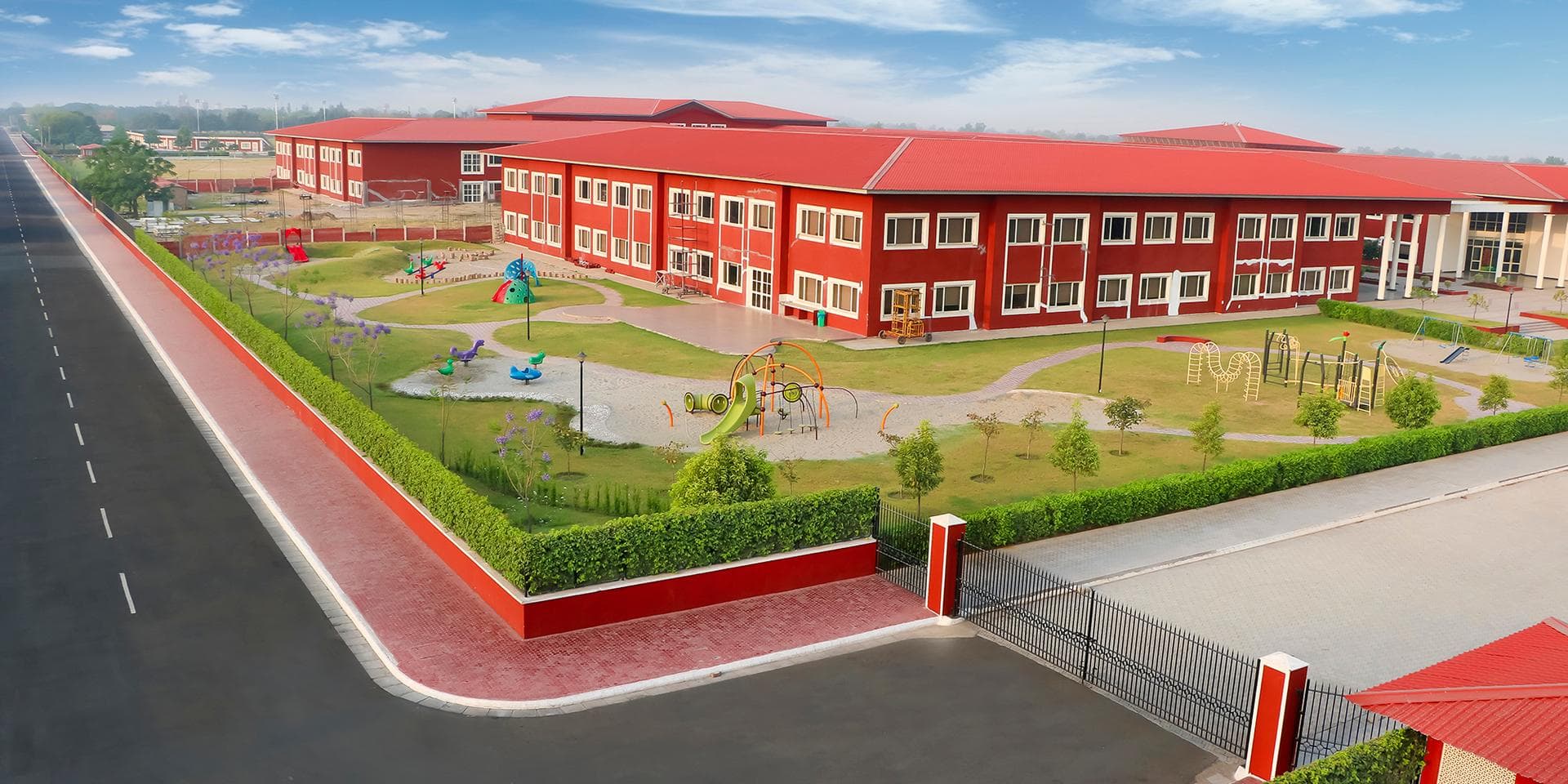
Unlocking Young Minds: Art & Craft for Early Creativity at Pathseekers

1. The Spark of Imagination: Why Art and Craft Matter in Early Years
Early schooling is a magical time when children begin to explore the world around them with boundless curiosity and energy. It's a period not just for learning ABCs and 123s, but for developing a strong foundation for lifelong learning and personal growth. At Pathseekers School in Beas, Punjab, we firmly believe that education extends far beyond textbooks. We focus on nurturing every aspect of a child's development, ensuring they grow into confident, creative, and compassionate individuals ready to face future challenges with a positive mindset and innovative spirit.
Within this holistic approach, art and craft activities play an incredibly vital role. They are not simply 'extra-curricular' pastimes; rather, they are fundamental tools for igniting a child's imagination and fostering creativity from a very young age. When children engage in drawing, painting, sculpting, or making things with their hands, they are not just having fun; they are actively learning, experimenting, and expressing themselves in unique ways. These experiences are crucial for developing their cognitive, emotional, and physical skills, laying the groundwork for more complex learning later on.
At Pathseekers School, we integrate art and craft into our daily curriculum because we understand their profound impact. Our dedicated teachers create an environment where every child feels encouraged to explore their artistic talents, make messes, and discover new ways to bring their ideas to life. We see art and craft as powerful pathways to discovery, helping children communicate their thoughts and feelings, solve problems creatively, and build a strong sense of self. This commitment ensures that our students receive a truly comprehensive and enriching educational experience right from their early years. You might also enjoy reading about Revolutionizing Creativity How Generative Ai Is Changing Des.
2. More Than Just Fun: The Educational Value of Art
Many parents might view art and craft as simply enjoyable activities, a way for children to pass the time. However, their educational value goes much deeper. Engaging in artistic endeavors provides a rich platform for cognitive development, challenging young minds in ways that traditional academic subjects often cannot. When a child decides what colours to use for a drawing, how to shape clay, or what materials to combine for a collage, they are engaging in critical thinking, planning, and decision-making processes. These seemingly simple choices build complex neural pathways in their developing brains, enhancing their ability to process information.
Consider a child working with playdough or clay. They are not just squishing it; they are learning about texture, volume, and form. They are envisioning an object and then manipulating the material to bring that vision to reality. This process involves spatial reasoning and an understanding of cause and effect. Similarly, when they draw a picture, they are translating a three-dimensional world onto a two-dimensional surface, requiring observation skills and abstract thinking. These activities are foundational for understanding concepts in geometry, science, and even language, as they learn to represent ideas visually.
At Pathseekers School, we see art as an integral part of our curriculum, not separate from it. We often weave art activities into lessons on science, history, or literature, creating a more engaging and memorable learning experience. For instance, after learning about animals, children might create animal masks or draw their habitats. This integration helps children connect different subjects, showing them that learning is not compartmentalized but a vast, interconnected web of knowledge. This holistic approach ensures that art truly enhances their overall educational journey. Learn more about Indias Latest Initiative Empowering Rural Women Through Digi to expand your understanding.
3. Developing Fine Motor Skills and Hand-Eye Coordination
One of the most immediate and tangible benefits of art and craft activities in early schooling is the development of fine motor skills. These are the small, precise movements of the hands and fingers, essential for tasks like writing, buttoning clothes, tying shoelaces, and using cutlery. Without well-developed fine motor skills, children can struggle with everyday tasks and academic demands, leading to frustration. Art activities provide a natural and enjoyable way for children to practice and strengthen these crucial muscles, preparing them for the challenges of formal schooling and beyond.
Think about the actions involved in common art and craft projects: cutting with scissors requires careful control of finger muscles; gluing small pieces onto a paper demands precision; painting with a brush involves delicate hand movements; and drawing lines and shapes helps refine grip and control. Each of these actions, repeated over time, builds muscle memory and strengthens the small muscles in the hands and wrists. At Pathseekers School, our early years classrooms are filled with opportunities for these activities, from simple paper tearing to intricate bead stringing, all designed to enhance dexterity and coordination in a fun way.
Furthermore, art and craft activities significantly improve hand-eye coordination. This is the ability to use information received through the eyes to guide the hands in performing a task. When a child draws a line from one point to another, paints within an outline, or threads a needle, they are actively engaging their hand-eye coordination. Strong hand-eye coordination is vital not only for writing neatly but also for sports, playing musical instruments, and even using digital devices effectively. By providing a rich environment for these activities, Pathseekers School helps children develop foundational physical skills that support their learning and independence in countless ways. A related topic worth checking out is Revolutionizing Creativity How Generative Ai Is Changing Des.
4. Boosting Problem-Solving and Critical Thinking
Art and craft are powerful tools for nurturing problem-solving and critical thinking skills in young children. When embarking on an art project, children are often faced with choices and challenges that require them to think creatively and find solutions. For example, they might have a vision for what they want to create but limited materials, prompting them to innovate and adapt. This process of identifying a goal, considering different approaches, experimenting, and refining their work is essentially a hands-on lesson in problem-solving that transcends the art table and extends into all areas of life.
Imagine a child trying to build a stable structure out of recycled materials. They might try different adhesives, experiment with various shapes for the base, or discover that certain materials are stronger than others. Each 'failure' or unexpected outcome becomes an opportunity for learning and adjustment. They are constantly asking themselves, 'What if I try this?', 'Why did that happen?', or 'How can I make this better?'. These questions are at the heart of critical thinking, encouraging them to analyze situations, evaluate options, and make informed decisions, even at a very young age, which is highly beneficial for their academic journey. For practical tips, see this guide on Revolutionizing Creativity How Generative Ai Is Changing Des.
At Pathseekers School, our art and craft sessions are designed to encourage this kind of independent thinking. Teachers act as facilitators, gently guiding children rather than providing all the answers. We celebrate the process of exploration and discovery, valuing effort and experimentation over a perfect finished product. This approach empowers children to take risks, learn from their mistakes, and develop resilience. By fostering an environment where creative problem-solving is encouraged, we help our students build confidence in their ability to tackle challenges, a skill that is invaluable for their academic success and future careers, perfectly aligning with the CBSE's focus on competency-based learning.
5. Nurturing Emotional Expression and Self-Esteem
Art provides a unique and powerful outlet for emotional expression, especially for young children who may not yet have the vocabulary to articulate their complex feelings. Through colours, shapes, and forms, children can communicate joy, sadness, anger, or excitement in a safe and non-verbal way. A vibrant, energetic painting might reflect a day full of happiness, while darker colours or chaotic lines could express frustration or confusion. This ability to externalize emotions helps children process their inner world, leading to greater emotional intelligence and self-awareness as they grow and mature into young adults.
When children create something with their own hands, whether it's a simple drawing or a complex model, they experience a profound sense of accomplishment. This feeling of pride in their work is a powerful builder of self-esteem. Knowing that they have successfully brought an idea to life, from imagination to tangible form, boosts their confidence and encourages them to try new things. At Pathseekers School, we always display children's artwork prominently, celebrating each unique creation and acknowledging the effort and creativity behind it. This public validation reinforces their self-worth and encourages continued artistic exploration. If this interests you, also read about modern education.
Our teachers at Pathseekers School play a crucial role in nurturing this emotional growth. They encourage children to talk about their art, not to judge it, but to understand the stories and feelings behind it. They provide a supportive and non-judgmental environment where every child's artistic expression is valued. This approach helps children feel understood and accepted, fostering a positive self-image and a willingness to express themselves authentically. By offering a space for emotional release and creative triumph, art and craft activities contribute significantly to the overall emotional well-being and resilience of our young learners, preparing them for the social and emotional demands of life.
6. Connecting with the CBSE Curriculum: A Holistic Approach
The Central Board of Secondary Education (CBSE) curriculum, particularly in the early years, emphasizes a holistic, experiential, and child-centric approach to education. Art and craft activities fit seamlessly into this framework, providing practical, hands-on learning experiences that support various learning domains. The National Education Policy (NEP) 2020 also strongly advocates for art-integrated learning, recognizing its power to make education more joyful, engaging, and effective across all subjects. At Pathseekers School, we meticulously design our curriculum to align with these national guidelines, ensuring that art and craft are not isolated subjects but rather interwoven threads in the fabric of learning.
For example, in our early grades, art projects often complement lessons in Environmental Studies (EVS). Children might create collages of animals and their habitats after learning about biodiversity, or make models of different types of houses when discussing communities. In Language Arts, they can illustrate stories they've heard or created, which enhances their comprehension and storytelling abilities. Even in Mathematics, art can be used to explore concepts of symmetry, patterns, and shapes through drawing or building. This cross-curricular integration makes abstract concepts more concrete and understandable for young minds, reinforcing learning in a fun and creative manner. This is closely related to Indias Latest Initiative Revolutionizing Healthcare Through — a must-read for parents.
At Pathseekers School, our educators are trained to identify and leverage these connections. We use art and craft as a pedagogical tool to deepen understanding and engage students actively. Our annual exhibitions and classroom displays are testaments to how art is used to showcase learning across various subjects, reflecting the children's understanding and creativity. By aligning our art and craft programs with the CBSE curriculum, we ensure that our students receive a well-rounded education that prepares them not only academically but also as creative, adaptable, and critical thinkers, ready for the progressive stages of their schooling journey.
7. Art as a Language: Enhancing Communication Skills
Long before children master spoken or written language, they possess an innate ability to communicate visually. Art serves as a powerful, universal language that allows young learners to express ideas, share observations, and tell stories without needing a single word. When a child draws a picture of their family, a favourite pet, or an imagined adventure, they are essentially creating a narrative. This visual storytelling helps them organize their thoughts and convey complex emotions or concepts that might otherwise be difficult to articulate, fostering an early appreciation for diverse forms of communication.
Beyond non-verbal expression, art activities also significantly enhance verbal communication skills. As children work on projects, they often discuss their ideas with peers and teachers. They learn to describe their creations, explain their choices of colours or materials, and articulate the story behind their artwork. This encourages vocabulary development, as they learn new words related to art, colours, textures, and shapes. Such discussions build confidence in speaking and listening, crucial components of effective communication. At Pathseekers School, we create ample opportunities for children to present and talk about their artwork, fostering a rich communicative environment. You might also enjoy reading about digital learning.
Collaborative art projects further refine communication and social skills. When children work together on a mural or a group sculpture, they must learn to share materials, negotiate ideas, and cooperate to achieve a common goal. This involves active listening, respectful disagreement, and effective teamwork. These interactions are invaluable for developing social competence and understanding different perspectives. By engaging in art as a form of communication, Pathseekers School students not only express themselves creatively but also build essential interpersonal skills that will serve them well throughout their academic and personal lives, making them more articulate and socially aware individuals.
8. The Role of Teachers and Environment at Pathseekers School
The effectiveness of art and craft in fostering creativity heavily relies on the environment and the guidance provided by educators. At Pathseekers School, our teachers are not just instructors; they are passionate facilitators who understand the unique developmental needs of young children. They create a nurturing and stimulating atmosphere where children feel safe to explore, experiment, and express themselves without fear of judgment. Our teachers encourage curiosity and provide gentle prompts, allowing children to lead their own creative journeys rather than simply copying a prescribed model, fostering true originality. Learn more about digital learning to expand your understanding.
Our classrooms and dedicated art spaces at Pathseekers School are thoughtfully designed to be inspiring and resource-rich. We provide a wide array of materials – from traditional paints, crayons, and clay to recycled items like cardboard rolls, fabric scraps, and natural elements found outdoors. This diverse selection encourages children to think resourcefully and creatively about how to use different textures and forms. The spaces are organized to be accessible, allowing children to independently choose materials and embark on their projects. This autonomy is crucial for developing initiative and a sense of ownership over their creative process.
Furthermore, our teachers at Pathseekers School are trained to celebrate individuality and unique perspectives. There is no 'right' or 'wrong' way to create art; every child's interpretation is valued and respected. We focus on the effort and the process of creation, rather than just the final product. This approach builds confidence and encourages children to express their authentic selves. By fostering such a positive and supportive environment, our educators ensure that art and craft become a joyful and empowering experience for every child, laying a strong foundation for lifelong creativity and self-expression, aligning perfectly with our school's ethos of holistic development.
9. Simple Ways Parents Can Encourage Creativity at Home
While Pathseekers School provides a rich environment for artistic exploration, parents can significantly amplify these benefits by encouraging creativity at home. You don't need a fancy art studio or expensive materials. Simple, everyday items can become powerful tools for imaginative play and artistic expression. For instance, providing blank paper and crayons, washable paints, or even just a box of old clothes for dress-up can ignite a child's imagination. The key is to make materials accessible and to encourage their use, letting children know that their creative pursuits are valued and supported in their home environment. A related topic worth checking out is Indias Latest Breakthrough In Social Impact A New Era Of Emp.
Creating a dedicated space, no matter how small, for art and craft activities can be very helpful. It could be a corner of a room with a small table, or even just a mat spread out on the floor. Storing materials in clear, labeled containers makes them easy for children to access and put away, fostering independence. Remember, the focus should be on the process of creation, not on achieving a perfect result. Avoid saying things like, 'What is that supposed to be?' Instead, ask, 'Tell me about what you made!' or 'What colours did you choose and why?' This encourages reflection and builds confidence in their unique artistic voice.
Most importantly, engage with your child's art with genuine interest and enthusiasm. Sit with them while they draw or build, ask open-ended questions, and praise their effort and originality. Display their artwork prominently around the house, making them feel proud of their creations. Even simple activities like baking together, gardening, or building with blocks are forms of creative problem-solving and can be framed as such. By providing encouragement, materials, and a supportive atmosphere at home, parents can play a crucial role in nurturing their child's creative spirit, complementing the excellent foundation laid at Pathseekers School.
10. Building a Foundation for Lifelong Creativity
In conclusion, the integration of art and craft into early schooling is far more than just a pleasant diversion; it is a fundamental pillar of holistic child development. From enhancing fine motor skills and hand-eye coordination to boosting problem-solving abilities and fostering emotional intelligence, the benefits are vast and far-reaching. These activities provide a unique pathway for children to explore their world, express their inner thoughts and feelings, and develop critical thinking skills that are essential for success in all aspects of life. At Pathseekers School, we firmly believe that a strong foundation in creativity is key to unlocking a child's full potential. For practical tips, see this guide on Indias Latest Breakthrough In Quantum Computing A New Era Of.
The early experiences children have with art and craft lay the groundwork for a lifelong appreciation of creativity and innovation. Children who are encouraged to think outside the box, experiment, and express themselves freely in their early years are more likely to become adaptable, resilient, and resourceful adults. They develop a growth mindset, understanding that challenges are opportunities for learning and that there are often multiple solutions to a single problem. This creative confidence is invaluable in a rapidly changing world, where the ability to innovate and think critically is highly prized in every field, from science and technology to entrepreneurship and the arts.
At Pathseekers School in Beas, Punjab, we are committed to nurturing well-rounded individuals who are not only academically strong but also creatively vibrant. Our comprehensive approach, deeply rooted in the CBSE curriculum and enriched by extensive art and craft programs, ensures that every child has the opportunity to discover and develop their unique talents. By fostering creativity from the very beginning, we are not just teaching children to draw or paint; we are empowering them to think, to imagine, to innovate, and to confidently shape their own futures, becoming the pathseekers of tomorrow. We invite you to join us in this exciting journey of discovery and growth.
Recommended Reading & Resources
Explore these related articles and resources to deepen your understanding of this topic:
- Indias Latest Breakthrough In Disaster Management A New Era
- Indias Latest Breakthrough In Quantum Computing A New Era Of
- Revolutionizing Design The Impact Of Generative Ai On Creati
- Revolutionizing Design The Impact Of Generative Ai On Creati
- Revolutionizing Design The Impact Of Generative Ai On Creati
- Looking For A Wordpress Web Design Company Heres What You Sh
- Neural Frontiers Navigating The Intersection Of Artificial I
- Why Homeowners Trust Professional Residential Insulation Com
- What Should You Expect Before A Tooth Extraction
- Why Website Content Creation Services Quietly Decide If Your
Published by Pathseekers School, Beas — A leading CBSE school in Amritsar, Punjab.
More articles on our official portal