Why Early Reading & Math Foundations Power Future Success

Introduction: The Crucial Early Years (Classes I-III)
At Pathseekers School in Beas, Punjab, we firmly believe that the early years of a child's education are the most critical for laying down a strong foundation. Specifically, Classes I, II, and III are not just about introducing new subjects; they are about building the fundamental skills that will support all future learning. During this period, children develop their understanding of the world, their ability to communicate, and their capacity for logical thought. It's a time when curiosity should be nurtured, and basic concepts should be solidified in a joyful and engaging manner.
These foundational years are like constructing the base of a tall building. If the base is weak, the entire structure will be unstable, no matter how grand the upper floors are. Similarly, if a child's basic skills in reading and mathematics are not strong by the end of Class III, they might struggle significantly in higher classes. This isn't about rote learning or memorization; it's about deep understanding and the ability to apply what they've learned. Our mission at Pathseekers School is to ensure every child receives this robust foundation, preparing them for academic excellence and lifelong success.
The focus on reading and math during Classes I-III is paramount because these two subjects are the cornerstones of all other learning. Reading opens up the entire world of knowledge, allowing children to understand textbooks, instructions, and stories across various subjects. Mathematics, on the other hand, develops critical thinking, problem-solving abilities, and a structured way of approaching challenges. When these skills are mastered early, children gain confidence and develop a positive attitude towards learning, making their educational journey much smoother and more rewarding. You might also enjoy reading about reading programs.
Why Reading is More Than Just Words
Reading is far more than simply recognizing letters and sounding out words; it's the gateway to understanding, imagination, and empathy. In Classes I-III, children transition from learning to read to reading to learn. This shift is monumental. A child who can read well can independently explore new ideas, follow instructions in science experiments, understand historical events, and even grasp complex concepts in higher-grade textbooks. Without strong reading skills, every academic subject becomes a hurdle, making the learning process frustrating and less effective.
Beyond academics, reading significantly enhances a child's vocabulary and general knowledge. When children read diverse stories and non-fiction books, they encounter new words in context, which helps them understand and use these words naturally. This expanded vocabulary improves their communication skills, both written and spoken. Moreover, reading exposes them to different cultures, ideas, and perspectives, broadening their worldview and fostering a sense of curiosity about the world around them. It truly is a superpower that empowers children in countless ways.
At Pathseekers School, we emphasize that reading comprehension is the ultimate goal. It's not enough to just decode words; children must understand what they are reading, recall details, identify the main idea, and make inferences. For instance, in Class II, reading a story about a farmer, a child should not only be able to read the words but also explain the plot, describe the characters, and understand the moral of the story. This deeper level of engagement with text is what truly unlocks the power of reading and prepares them for complex texts in later grades. Learn more about smart classrooms to expand your understanding.
The CBSE Framework for Early Reading
The Central Board of Secondary Education (CBSE) curriculum places a significant emphasis on foundational literacy skills right from Class I. The framework is designed to ensure a systematic and progressive development of reading abilities. It starts with phonological awareness, which is the ability to hear, identify, and manipulate individual sounds (phonemes) in spoken words. This is crucial for phonics, where children learn the relationship between letters and sounds, enabling them to decode new words independently.
As children progress through Classes II and III, the CBSE curriculum gradually introduces more complex reading strategies. This includes building a strong sight word vocabulary – words that children recognize instantly without having to sound them out, like 'the,' 'and,' 'is.' It also focuses on developing fluency, which means reading smoothly and with expression, not just word by word. Story reading, poetry, and engaging texts are integral to the curriculum, ensuring that children encounter a rich variety of literary experiences.
At Pathseekers School, our teaching methods are closely aligned with these CBSE guidelines. We use a multi-sensory approach to teach phonics, engaging children through songs, games, and interactive activities. For example, in Class I, students might learn the 'sh' sound by making a 'shushing' gesture while saying words like 'ship' or 'shoe.' We also encourage extensive reading of age-appropriate books from our well-stocked library, providing opportunities for children to practice their reading skills and develop a genuine love for books. Regular reading assessments help us track progress and provide targeted support where needed, ensuring no child is left behind. A related topic worth checking out is reading skills.
Practical Strategies for Parents: Fostering a Love for Reading
Parents play an incredibly vital role in cultivating a child's love for reading. One of the simplest yet most powerful strategies is to read aloud to your child every single day, even after they learn to read independently. Reading together creates a special bonding time and exposes children to more complex vocabulary and story structures than they might tackle on their own. Point to the words as you read, discuss the pictures, and ask questions about the story to keep them engaged. This practice also models good reading habits and shows them that reading is an enjoyable activity.
Creating a reading-rich environment at home is equally important. This doesn't mean you need a massive library; it means making books easily accessible and visible. Have a dedicated cozy corner where books are kept, perhaps a small bookshelf in their room or the living area. Take regular trips to local libraries or bookstores, allowing your child to choose books that pique their interest. When children have a say in what they read, they are much more likely to be motivated and excited about reading. Even magazines, comics, or recipe books can be great starting points. For practical tips, see this guide on effective learning.
Finally, make reading a fun and interactive experience rather than a chore. Play word games like 'I Spy' with letters or rhyming words. Encourage your child to retell stories in their own words or even create their own endings. Celebrate their reading milestones, no matter how small, with praise and encouragement. At Pathseekers School, we often share tips with parents during workshops on how to integrate reading into daily routines, such as reading street signs, product labels, or even movie titles. These small, consistent efforts at home significantly amplify the reading instruction they receive in school.
Why Math is More Than Just Numbers
Just like reading, mathematics in Classes I-III is much more than just memorizing tables or solving sums. It's about developing a fundamental understanding of quantity, patterns, and relationships, which are crucial for logical thinking and problem-solving in all aspects of life. Early math skills lay the groundwork for understanding more advanced concepts in science, technology, engineering, and even finance. Without a solid grasp of basic mathematical principles, children can face significant challenges as they progress to higher-level studies.
Mathematics helps children develop critical thinking skills that extend far beyond the classroom. When a child learns to count, compare quantities, or understand shapes, they are simultaneously developing their ability to categorize, analyze, and reason. For instance, understanding that 2 + 3 is the same as 3 + 2 helps them grasp the concept of commutativity, a basic property that will be vital in algebra. These early experiences with mathematical concepts train their brains to look for patterns, identify relationships, and solve problems systematically. If this interests you, also read about tech in schools.
Furthermore, math is an integral part of our daily lives. From telling time and understanding money to measuring ingredients for a recipe or calculating distances, mathematical concepts are constantly at play. By making math relevant and relatable in these early years, we help children see its practical value and develop a positive attitude towards it. At Pathseekers School, we ensure that children in Classes I-III experience math not just as abstract numbers, but as a tool for understanding and navigating their everyday world, fostering a sense of curiosity and confidence.
The CBSE Framework for Early Mathematics
The CBSE curriculum for Classes I-III is meticulously designed to build a strong foundation in mathematics, focusing on conceptual understanding rather than mere rote memorization. It emphasizes a hands-on, activity-based approach to learning. The core areas covered include Number Sense, which involves understanding numbers, counting, place value, and basic operations like addition, subtraction, multiplication, and division. The curriculum ensures that children grasp the 'why' behind the 'how' of mathematical procedures.
Beyond number operations, the CBSE framework introduces children to fundamental geometric shapes, both 2D and 3D, and their properties. They learn about patterns, measurement (length, weight, capacity, time, money), and data handling in a very basic and engaging way. For example, in Class I, students might use non-standard units like hand spans to measure length, gradually moving to standard units like centimeters in Class II. This progressive learning ensures that concepts are built upon previous knowledge, making learning cohesive and meaningful. This is closely related to reading skills — a must-read for parents.
At Pathseekers School, our math curriculum is entirely aligned with the CBSE objectives, utilizing innovative teaching methodologies to make learning enjoyable and effective. We use manipulatives like abacus, counting blocks, and geometric shapes to provide concrete experiences that help children visualize abstract concepts. For instance, when teaching addition in Class I, students might physically combine groups of objects to see the sum. We also integrate real-life scenarios into our lessons, such as using play money to teach counting and making change in Class III, ensuring that students can connect classroom learning to practical applications. Regular assessments focus on conceptual understanding, not just correct answers.
Practical Strategies for Parents: Making Math Engaging
Parents can significantly enhance their child's mathematical development by integrating math into everyday activities, making it an enjoyable and natural part of life. One excellent strategy is to play math games. Simple board games like Ludo or Snakes and Ladders involve counting and number recognition. Card games can help with number comparisons and basic addition. There are also numerous educational apps and online games designed to make math fun and interactive, reinforcing concepts learned in school without feeling like homework. These playful interactions help children develop a positive relationship with numbers.
Another effective strategy is to involve your child in practical, real-life math scenarios. When you go shopping, let your Class II child help count items, compare prices, or calculate how many more items you need. In the kitchen, involve your Class III child in measuring ingredients for baking, discussing fractions like 'half a cup' or 'quarter of a spoon.' Ask them to help set the table, counting plates and cutlery, or figuring out how many minutes are left until dinner. These experiences show children that math is everywhere and is a useful tool for everyday tasks. You might also enjoy reading about literacy development.
Encourage curiosity and problem-solving by asking open-ended math questions. Instead of just giving the answer, ask, “How many ways can we make 10 using these blocks?” or “If we leave at 3 PM and the journey takes 45 minutes, what time will we arrive?” Celebrate their efforts and their thought process, even if the answer isn't immediately correct. At Pathseekers School, we often advise parents to praise the effort and the journey of problem-solving, rather than just the final answer. This builds resilience and a growth mindset, which are crucial for success in mathematics and beyond.
The Interconnectedness of Reading and Math
While often taught as separate subjects, reading and mathematics are profoundly interconnected, especially in the foundational years of Classes I-III. Strong reading skills are absolutely essential for success in mathematics. Consider a typical math word problem in Class III: “Rohan has 15 apples. He gives 7 apples to his friend. How many apples does Rohan have left?” A child must first be able to read and comprehend the problem, identify the key information, and understand what is being asked before they can even begin to apply their mathematical skills to solve it. Poor reading comprehension can make even simple math problems seem insurmountable. Learn more about literacy development to expand your understanding.
Conversely, the logical thinking and problem-solving skills developed through mathematics can significantly enhance reading comprehension. When children learn to identify patterns in numbers, follow steps in an algorithm, or deduce solutions to math problems, they are exercising their analytical brains. This analytical ability translates directly to understanding narrative structures, identifying cause and effect in stories, and making inferences from texts. The systematic approach to problem-solving in math helps children break down complex reading passages into manageable parts, improving their overall understanding.
At Pathseekers School, we deliberately highlight this synergy between reading and math. Our teachers often integrate literacy into math lessons by having students read and discuss word problems, or write explanations of their mathematical solutions. Similarly, reading lessons might include stories with mathematical themes or characters who use math to solve problems. This integrated approach helps children see the bigger picture of learning, reinforcing skills across subjects and fostering a more holistic development of their cognitive abilities. It’s about building a well-rounded learner who can connect ideas from different domains.
Spotlight on Pathseekers School: Our Commitment to Foundations
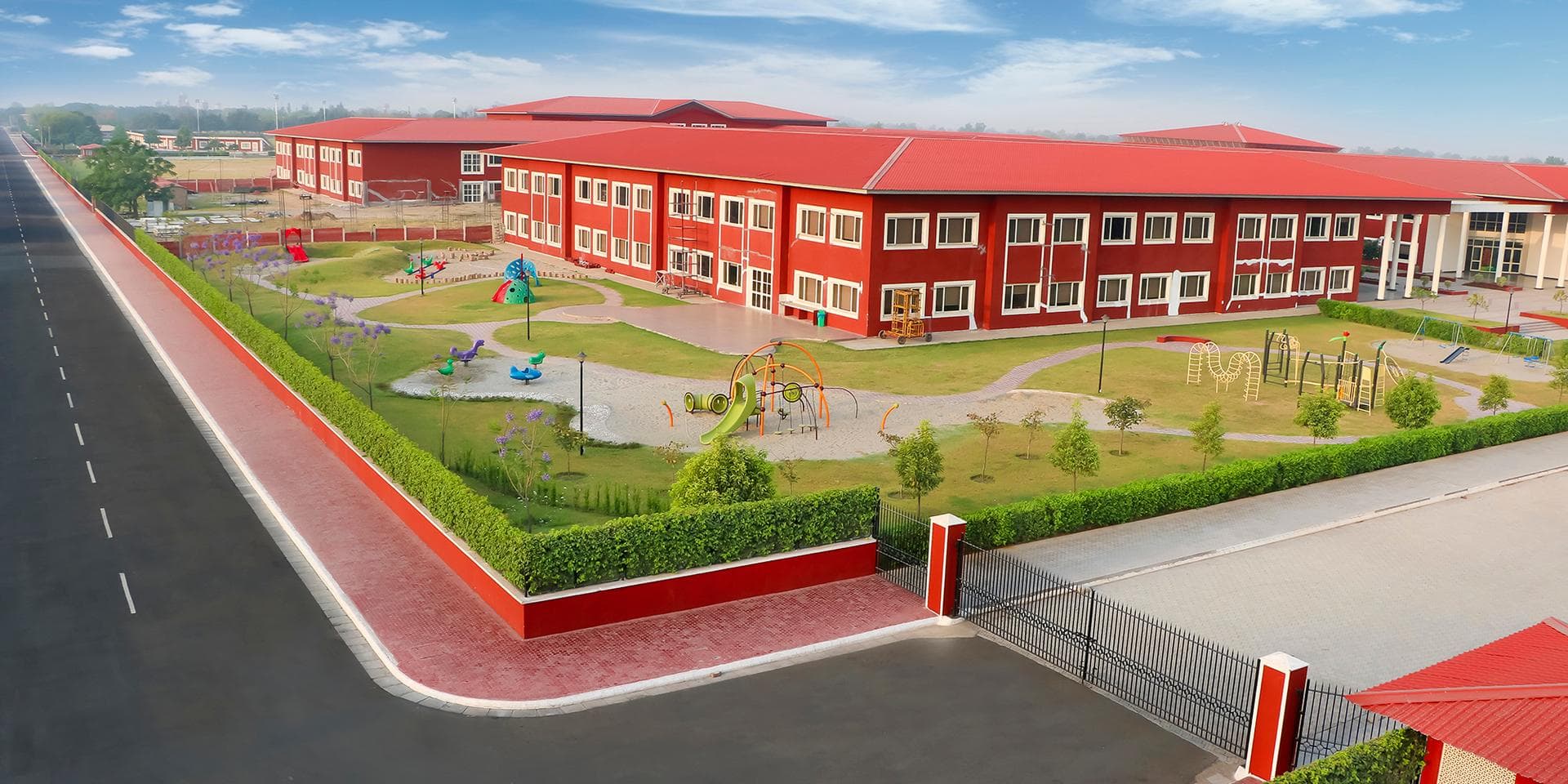
At Pathseekers School, located in the serene environment of Beas, Punjab, our commitment to building strong foundational skills in reading and mathematics for Classes I-III is at the core of our educational philosophy. We understand that these early years determine a child's entire academic trajectory. Our dedicated team of experienced educators is trained in child-centric methodologies that make learning engaging, interactive, and deeply meaningful. We don't just teach the curriculum; we inspire a love for learning that lasts a lifetime. A related topic worth checking out is cognitive development.
Our learning environment is specifically designed to support this foundational development. Classrooms are vibrant spaces filled with age-appropriate learning resources, including a rich library of diverse books, educational games, and mathematical manipulatives. We maintain small class sizes to ensure that each child receives personalized attention and support tailored to their individual learning pace and style. This allows our teachers to identify and address any learning gaps early on, providing timely interventions and enrichment opportunities as needed.
Parent-teacher collaboration is another cornerstone of our approach at Pathseekers School. We believe that education is a partnership, and parents are crucial allies in a child's learning journey. We regularly conduct workshops and parent-teacher meetings to share insights, discuss progress, and provide practical strategies for supporting learning at home. Our goal is to create a seamless learning experience between home and school, ensuring that every child in Classes I-III develops the robust reading and mathematical foundations necessary to thrive in an increasingly complex world. We are truly committed to nurturing future pathseekers.
Conclusion: Building Bright Futures Together
The journey through Classes I, II, and III is a period of immense growth and discovery for every child. The foundational skills in reading and mathematics developed during these crucial years at Pathseekers School in Beas, Punjab, are not merely academic requirements; they are the essential tools that empower children to become confident, competent, and lifelong learners. A child with strong reading abilities can unlock the world of knowledge, while a child proficient in math develops critical thinking and problem-solving skills vital for navigating future challenges. These are the building blocks upon which all future success is constructed. For practical tips, see this guide on holistic development.
As parents, your active involvement and encouragement are invaluable. By fostering a love for reading through shared stories and creating a stimulating home environment, and by making math fun and relevant through games and daily activities, you significantly amplify the efforts of our dedicated teachers. Remember, consistency and patience are key. Celebrate every small milestone and nurture their curiosity, allowing them to explore and discover at their own pace. Together, we can create an educational journey that is both enriching and empowering for your child.
At Pathseekers School, we are deeply committed to providing an educational experience that goes beyond textbooks, focusing on holistic development and equipping our students with the skills they need to excel. We invite you to partner with us in this vital mission of laying strong foundations for your child's bright future. By prioritizing reading and math in these early years, we are not just preparing them for the next grade; we are preparing them for a lifetime of learning, innovation, and achievement. Let’s build these strong foundations together, ensuring every Pathseekers student is ready to confidently chart their course ahead.
Recommended Reading & Resources
Explore these related articles and resources to deepen your understanding of this topic:
Published by Pathseekers School, Beas — A leading CBSE school in Amritsar, Punjab.
More articles on our official portal